


 VI
VIWhat is an abutment in dentistry, and why is it essential in dental implants? A dental abutment is a key implant abutment component that connects the dental implant to the final crown, ensuring stability, function, and aesthetics. In abutment in dentistry, the abutment function is to support chewing forces while shaping healthy gums. There are various types of dental abutments, including healing abutment, permanent abutment, custom abutment, stock abutment, and multi-unit abutment, made from advanced abutment materials. Understanding abutment placement process, dental implant components, and abutment vs implant vs crown helps patients achieve optimal results at Tam Duc Smile Dental.
1. What Is an Abutment in Dentistry?
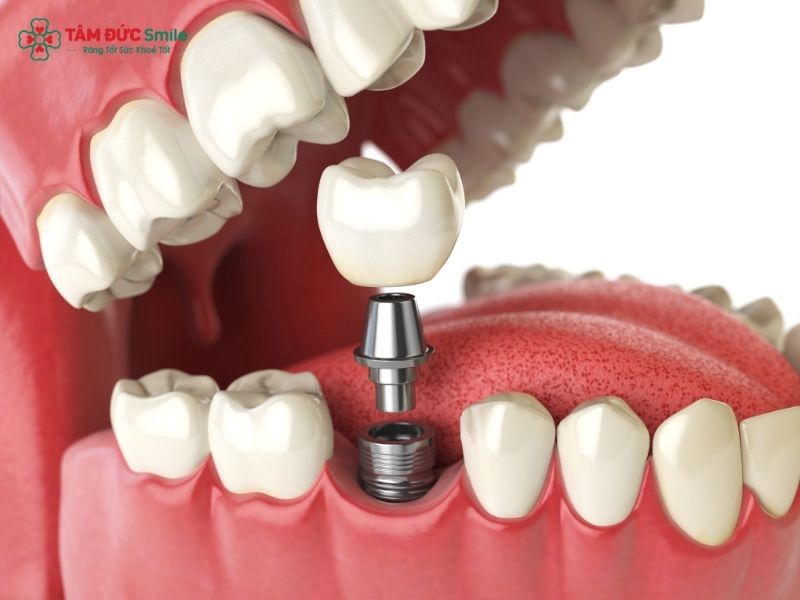
When patients search for what is an abutment, they are usually exploring the dental implant process and trying to understand how a missing tooth is restored to look, feel, and function like a natural one. In dentistry, a dental abutment is a small but essential component that connects a dental implant (the artificial tooth root placed in the jawbone) to the visible replacement tooth, known as the crown.
In simple terms, an abutment acts as a connector or bridge. It sits on top of the implant fixture and extends slightly above the gum line, providing a stable foundation for the final restoration. Without an abutment, the implant and the crown cannot function as a single, integrated unit.
From a clinical perspective, the definition of a dental abutment is very precise: a connector between the implant and the prosthesis/crown. This small component plays a large role in determining how comfortable, stable, and natural the final tooth will be.
The function of an abutment goes beyond simple attachment. It:
- Transfers chewing forces from the crown to the implant and jawbone
- Helps shape and support the surrounding gum tissue
- Influences the aesthetics of the final smile
- Ensures long-term stability of the dental implant system
Understanding abutment in dentistry is especially important for patients considering implants, because the quality, material, and placement of the abutment directly affect long-term success.

2. Dental Implant Components: Implant, Abutment, and Crown
To fully understand what is an abutment, it is important to look at the complete dental implant system. A modern implant restoration is made up of three main dental implant components:
2.1 The Dental Implant (Implant Post)
The dental implant itself is a titanium or titanium-alloy screw placed into the jawbone. Its role is to replace the root of a missing tooth. Over time, the implant fuses with the bone through a biological process known as osseointegration. This fusion creates a strong and permanent anchor.
Key characteristics of the implant:
- Acts as the artificial tooth root
- Made from biocompatible materials
- Placed surgically into the jawbone
- Designed for long-term durability
2.2 The Abutment
The abutment is attached to the implant after the bone has healed. Its function is to connect the implant to the crown. This component emerges slightly above the gum line and is shaped to support the final restoration.
Important attributes of the abutment include:
- Materials: titanium, zirconia, stainless steel, or gold
- Types: healing abutment, temporary abutment, permanent abutment
- Placement timing: after osseointegration and healing
2.3 The Dental Crown
The crown is the visible part of the tooth. It is custom-made to match the color, shape, and size of natural teeth. The crown is attached directly to the abutment, completing the restoration.
When these three components work together—implant, abutment, and crown—they create a replacement tooth that closely mimics a natural one in both appearance and function.

3. Types of Dental Abutments
There are several types of dental abutments, each designed for a specific stage of treatment or clinical need. Choosing the right abutment is critical for comfort, aesthetics, and long-term success.
3.1 Healing Abutment
A healing abutment is usually placed after the implant has integrated with the jawbone. Its main purpose is to guide and shape the gum tissue as it heals.
Key features of a healing abutment:
- Temporarily placed
- Helps gums heal in a natural contour
- Prepares the site for the final abutment and crown
Patients often wonder if healing abutments are uncomfortable. In most cases, they cause only mild pressure and minimal discomfort.
3.2 Temporary vs Permanent Abutments
A temporary abutment may be used when a provisional crown is needed. This is common in visible areas where aesthetics are important during healing.
A permanent abutment, on the other hand, is designed to support the final crown for many years.
Differences include:
- Temporary abutment: short-term use, supports provisional restorations
- Permanent abutment: long-term durability, supports final crown
3.3 Custom Abutment vs Stock Abutment
One of the most important decisions is choosing between a custom abutment and a stock abutment.
A stock abutment is pre-manufactured in standard shapes and sizes. It is cost-effective and suitable for many cases.
A custom abutment is individually designed for the patient using digital scans. Its benefit is a better fit, improved gum support, and superior aesthetics.
3.4 Multi-Unit Abutment
A multi-unit abutment is commonly used in full-arch restorations such as All-on-4 or All-on-6 treatments. Its use is to correct implant angulation and allow multiple crowns or bridges to be attached securely.
4. Abutment Materials and Their Impact
The materials used for abutments significantly influence both function and appearance.
4.1 Titanium Abutments
Titanium is the most commonly used material due to its strength and biocompatibility. Titanium abutments are known for:
- Excellent durability
- High resistance to chewing forces
- Strong integration with implant systems
4.2 Zirconia Abutments
Zirconia abutments are favored for their aesthetic advantages. Their white color closely resembles natural teeth, making them ideal for front teeth.
Key advantages:
- Improved aesthetics
- Reduced risk of gum discoloration
- High strength and biocompatibility
4.3 Other Materials
Some abutments are made from stainless steel or gold alloys. These materials are less common today but may be used in specific clinical situations.

5. Abutment Placement Process: What to Expect
Many patients ask about the abutment placement process and whether it is painful.
5.1 Timing of Placement
Abutment placement typically occurs after osseointegration, once the implant has fully bonded with the bone. This can take several weeks to a few months.
5.2 The Procedure
The dentist reopens the gum tissue, attaches the abutment to the implant, and allows the area to heal. In most cases, this is a minimally invasive procedure performed under local anesthesia.
5.3 Healing and Recovery
Recovery is usually quick. Patients may experience mild swelling or tenderness, but normal activities can often be resumed within a day or two.
6. Why Abutments Matter for Long-Term Implant Success
The importance of abutments cannot be overstated. They directly affect:
- Stability of the implant system
- Aesthetic impact on the gum line and smile
- Longevity of the crown and implant
A poorly designed or improperly placed abutment can lead to complications such as loosening, gum irritation, or aesthetic concerns.
7. Frequently Asked Questions About Abutments
7.1 Does getting an abutment hurt?
Most patients report minimal discomfort. The procedure is typically quick and well-tolerated.
7.2 Can abutments be replaced?
Yes. Abutments can be replaced or adjusted if needed due to wear, damage, or aesthetic concerns.
7.3 How do I care for my abutment?
Good oral hygiene is essential. Regular brushing, flossing, and dental checkups help maintain the health of the abutment and surrounding tissues.
7.4 How long does it take from implant to final crown?
The timeline varies but usually ranges from three to six months, depending on healing and individual conditions.
Tam Duc Smile Dental Clinic – A Modern Nationwide Dental System
Tam Duc Smile Dental Clinic is a leading comprehensive dental system, offering a full range of oral healthcare services from basic to advanced treatments, including routine dental check-ups, cavity treatment, scaling and aesthetic fillings, teeth whitening, porcelain crowns and veneers, orthodontics, and dental implant placement. With a team of highly experienced and dedicated dentists, along with advanced technologies such as Cone Beam CT 3D imaging and CAD/CAM systems, Tam Duc Smile Dental Clinic is committed to delivering a perfect smile that is safe, durable, and long-lasting over time. Book your appointment today for a free consultation via Hotline 1900.8040
- 52 Tan Ky Tan Quy Street, Tay Thanh Ward, Ho Chi Minh City
- 140 Ly Thai To Street, Ban Co Ward, Ho Chi Minh City
- 76 Pham Hong Thai Street, Ben Thanh Ward, Ho Chi Minh City
- 708–720 Dien Bien Phu Street, Thanh My Tay Ward, Ho Chi Minh City
- 513 Hoang Van Thu Street, Tan Son Nhat Ward, Ho Chi Minh City
- 50 Le Van Viet Street, Tang Nhon Phu Ward, Ho Chi Minh City
- 1112 Huynh Tan Phat Street, Tan My Ward, Ho Chi Minh City
- 361 Phan Van Tri Street, Binh Loi Trung Ward, Ho Chi Minh City
- 128 Nguyen Oanh Street, Hanh Thong Ward, Ho Chi Minh City
- Hotline: 1900.8040 – 0329 851 079
- Opening hours: 08:00 AM – 07:30 PM; Sunday: 08:00 AM – 12:00 PM







Specialist Level I
Pham Nguyen
Content medically reviewed
A Specialist Level I in Odonto-Stomatology (Dentistry), former Deputy Head of the Department at the Ho Chi Minh City Hospital of Odonto-Stomatology, with extensive experience in dental implantology, sinus lift procedures, and oral and maxillofacial surgery. He has obtained numerous advanced professional certifications both in Vietnam and internationally.
Xem thêm thông tinBÀI VIẾT LIÊN QUAN
Multiple Tooth Implants: Implant-Supported Bridge & Jawbone Care
Multiple Tooth Implants are an advanced solution for replacing several missing teeth using titanium implants...
Do Dental Implants Hurt? Pain Timeline, Recovery & What to Expect
Do dental implants hurt? This is one of the most common concerns for patients considering...
Dental Implant Surgery: Procedure, Costs, Recovery & Advanced Techniques
Dental implant surgery is a modern dental implant procedure designed to replace missing teeth through...
Dental Implant Components: Parts, Materials & Implant System Explained
Dental implant components are the foundation of a successful implant restoration, consisting of three main...
Dental Implant Cleaning Tools for Implant Hygiene and Maintenance Guide
Dental implant cleaning tools play a vital role in maintaining long-term implant health and preventing...
Dental Implant Bridge: Implant-Supported Fixed Tooth Replacement
A dental implant bridge is an advanced implant-supported bridge solution designed to replace multiple missing...