


 VI
VIDental implant components are the foundation of a successful implant restoration, consisting of three main parts: the implant fixture, abutment, and dental crown on implant. The implant body, usually made of medical-grade titanium or zirconia, is placed into the jawbone to replace the missing tooth root and support long-term osseointegration. The abutment connects the fixture to the implant-supported crown, ensuring stability, aesthetics, and proper bite force distribution. Modern dental implant systems offer various implant connection types such as internal hex or external hex for optimal compatibility. At Tam Duc Smile Dental Clinic, high-quality implant components are carefully selected to deliver durable, functional, and natural-looking results.
1. Dental implant components: an overview
Dental implant components are the core structural elements that make up a modern dental implant system, designed to replace a missing tooth in both function and appearance. From a clinical perspective, understanding dental implant parts is essential because each component plays a distinct biological and mechanical role in long-term treatment success.
A complete implant restoration is not a single device but a coordinated system that integrates with bone, soft tissue, and prosthetic materials. The three fundamental elements include the implant fixture, the implant abutment, and the dental crown on implant. Together, these components enable predictable implant osseointegration, stable load distribution, and natural aesthetics comparable to a healthy tooth.
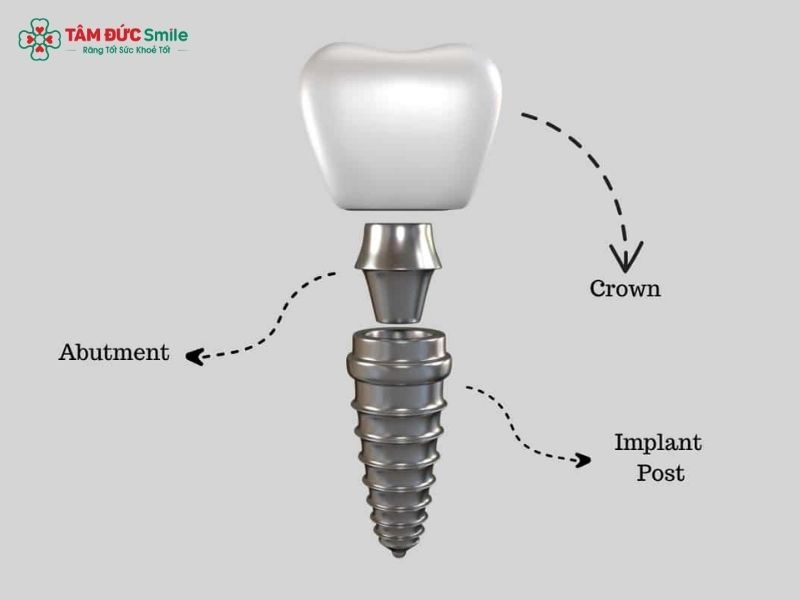
2. Main dental implant parts and their functions
2.1 Implant fixture – the artificial tooth root
The implant fixture is the foundation of all dental implant components. Surgically placed into the jawbone, it functions as an artificial tooth root and anchors the entire restoration. Most fixtures are made from implant body titanium, a material chosen for its high strength and excellent biocompatibility.
Through the biological process of implant osseointegration, bone cells grow and bond directly to the fixture surface, creating long-term stability. Surface treatments such as SLA or anodized coatings further enhance bone-to-implant contact, improving healing predictability.
2.2 Implant abutment – the connecting element
The implant abutment connects the implant fixture to the prosthetic crown. It emerges through the gum tissue and determines both the angulation and support of the final restoration. Abutments may be standard or customized, depending on soft-tissue anatomy and aesthetic requirements.
Modern implant connection types—including internal hex implant, external hex implant, and Morse taper—directly influence stability, stress distribution, and resistance to screw loosening.
2.3 Dental crown on implant – restoring form and function
The dental crown on implant is the visible portion of the restoration. It restores chewing efficiency, phonetics, and smile aesthetics. Common materials include porcelain and zirconia, selected based on bite force, occlusion, and cosmetic demands.
When combined correctly with the fixture and abutment, the implant-supported crown closely mimics the look and performance of a natural tooth.
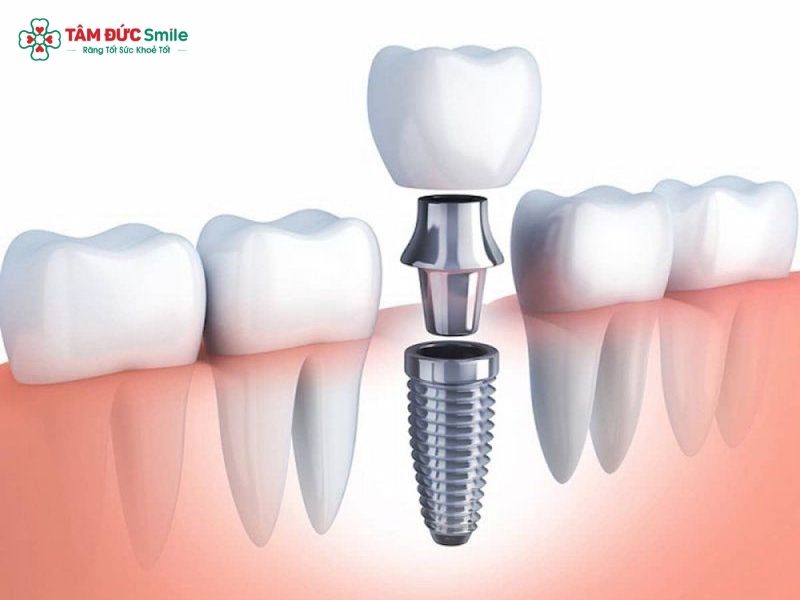
3. Implant materials used in modern dental implant systems
Material selection is a critical factor in the success of implant prosthetic components.
Titanium remains the gold standard for implant fixtures due to its corrosion resistance and proven long-term outcomes. In specific cases, zirconia dental implant systems are used for patients with high aesthetic demands or metal sensitivities.
For abutments and crowns, zirconia offers excellent translucency and strength, while titanium abutments provide superior mechanical durability in posterior regions. The combination of these materials within a single dental implant system allows clinicians to balance strength, aesthetics, and biological compatibility.
4. Implant connection types and prosthetic compatibility
The interface between the fixture and abutment is one of the most important dental implant parts.
Internal hex implant connections offer improved load distribution and reduced micro-movement compared to older designs. External hex implant systems, while historically significant, are now mainly used in specific full-arch applications.
Advanced designs such as Morse taper connections and implant platform switching help preserve crestal bone and soft tissue health. These features directly impact the longevity of the implant and the stability of the implant-supported crown over time.
5. How dental implant components affect treatment outcomes
From a clinical standpoint, the quality and compatibility of dental implant components determine long-term success. Proper integration of the implant fixture, abutment, and implant screw ensures optimal force distribution during chewing, reducing the risk of mechanical failure.
Equally important is biological stability. Well-designed components support healthy gum contours, minimize bacterial infiltration, and promote stable implant osseointegration. When these factors are carefully planned and executed, implant restorations can function reliably for decades.
At Tam Duc Smile Dental, treatment planning emphasizes the selection of high-quality implant prosthetic components and precise restorative protocols, helping patients achieve durable, functional, and natural-looking implant outcomes.
Tam Duc Smile Dental Clinic – A Modern Nationwide Dental System
Tam Duc Smile Dental Clinic is a leading comprehensive dental system, offering a full range of oral healthcare services from basic to advanced treatments, including routine dental check-ups, cavity treatment, scaling and aesthetic fillings, teeth whitening, porcelain crowns and veneers, orthodontics, and dental implant placement. With a team of highly experienced and dedicated dentists, along with advanced technologies such as Cone Beam CT 3D imaging and CAD/CAM systems, Tam Duc Smile Dental Clinic is committed to delivering a perfect smile that is safe, durable, and long-lasting over time. Book your appointment today for a free consultation via Hotline 1900.8040
- 52 Tan Ky Tan Quy Street, Tay Thanh Ward, Ho Chi Minh City
- 140 Ly Thai To Street, Ban Co Ward, Ho Chi Minh City
- 76 Pham Hong Thai Street, Ben Thanh Ward, Ho Chi Minh City
- 708–720 Dien Bien Phu Street, Thanh My Tay Ward, Ho Chi Minh City
- 513 Hoang Van Thu Street, Tan Son Nhat Ward, Ho Chi Minh City
- 50 Le Van Viet Street, Tang Nhon Phu Ward, Ho Chi Minh City
- 1112 Huynh Tan Phat Street, Tan My Ward, Ho Chi Minh City
- 361 Phan Van Tri Street, Binh Loi Trung Ward, Ho Chi Minh City
- 128 Nguyen Oanh Street, Hanh Thong Ward, Ho Chi Minh City
- Hotline: 1900.8040 – 0329 851 079
- Opening hours: 08:00 AM – 07:30 PM; Sunday: 08:00 AM – 12:00 PM







Specialist Level I
Pham Nguyen
Content medically reviewed
A Specialist Level I in Odonto-Stomatology (Dentistry), former Deputy Head of the Department at the Ho Chi Minh City Hospital of Odonto-Stomatology, with extensive experience in dental implantology, sinus lift procedures, and oral and maxillofacial surgery. He has obtained numerous advanced professional certifications both in Vietnam and internationally.
Xem thêm thông tinBÀI VIẾT LIÊN QUAN
Multiple Tooth Implants: Implant-Supported Bridge & Jawbone Care
Multiple Tooth Implants are an advanced solution for replacing several missing teeth using titanium implants...
Do Dental Implants Hurt? Pain Timeline, Recovery & What to Expect
Do dental implants hurt? This is one of the most common concerns for patients considering...
Dental Implant Surgery: Procedure, Costs, Recovery & Advanced Techniques
Dental implant surgery is a modern dental implant procedure designed to replace missing teeth through...
Dental Implant Cleaning Tools for Implant Hygiene and Maintenance Guide
Dental implant cleaning tools play a vital role in maintaining long-term implant health and preventing...
Dental Implant Bridge: Implant-Supported Fixed Tooth Replacement
A dental implant bridge is an advanced implant-supported bridge solution designed to replace multiple missing...
Bone Graft for Dental Implant: Types, Procedure, Cost & Healing
A bone graft for dental implant is a crucial solution when jawbone augmentation is needed...