


 VI
VIFull mouth dental implants are an advanced solution for complete smile rehabilitation, replacing missing teeth with a stable full-arch restoration supported by implants. Modern approaches such as All-on-4 implants, implant-supported dentures, and fixed prosthesis designs rely on precise dental implant procedures and successful osseointegration to restore function and aesthetics. Candidates are evaluated based on strict implant candidacy criteria, jawbone health, and the possible need for jawbone bone grafting. Compared to traditional dentures, patients experience clear benefits vs. dentures, easier recovery and aftercare, and predictable long-term maintenance, while understanding the risks and complications and the cost of full mouth implants. At Tam Duc Smile Dental, personalized full-mouth solutions are planned to deliver lasting comfort, confidence, and natural results.
1. Full Mouth Dental Implants Explained
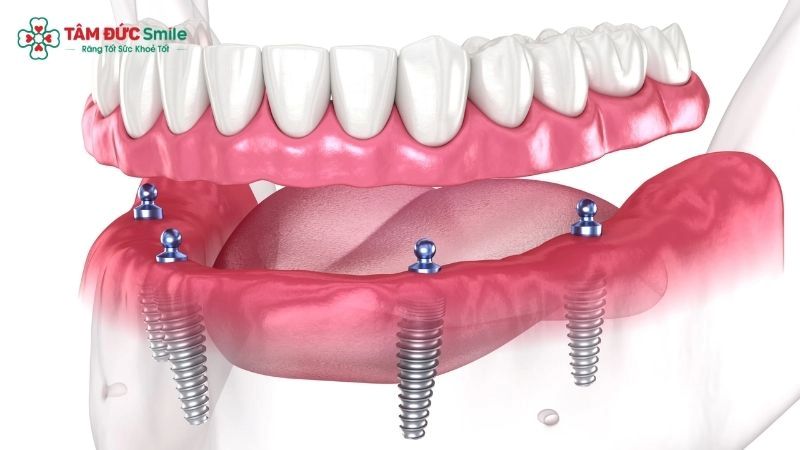
Full mouth dental implants are an advanced, comprehensive solution designed to replace an entire upper arch, lower arch, or both arches of missing or failing teeth. Instead of relying on traditional removable dentures that sit on the gums, full mouth dental implants use a strategically placed set of titanium implants embedded in the jawbone to support a complete set of prosthetic teeth. This approach delivers superior stability, function, and aesthetics while closely mimicking the feel of natural teeth.
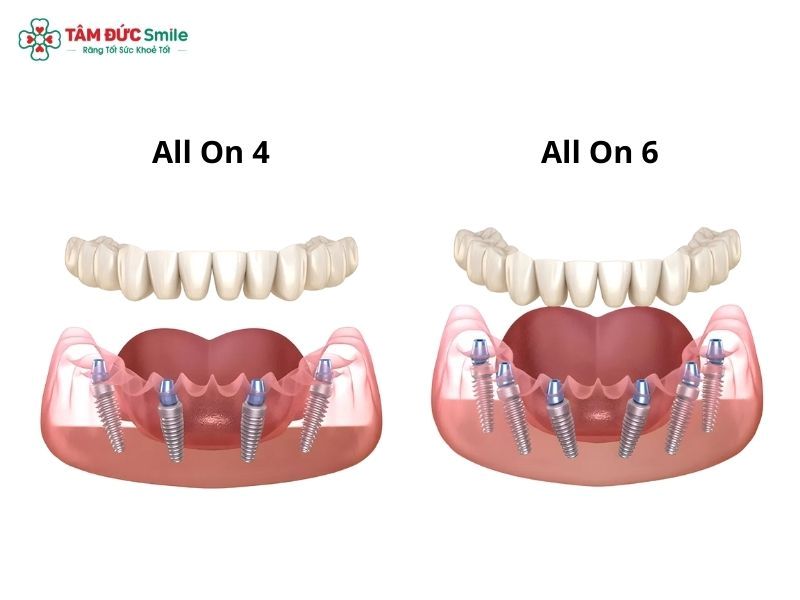
At their core, full mouth dental implants are a form of full-arch restoration, meaning the entire dental arch is rebuilt using implant technology rather than individual crowns for each missing tooth. Depending on the patient’s anatomy and clinical needs, the treatment may involve All-on-4 implants, All-on-6, or other implant-supported solutions such as implant-supported dentures with a fixed prosthesis or a removable overdenture.
Unlike conventional dentures, which can slip or cause discomfort, full mouth dental implants rely on osseointegration—the biological process where the implant fuses with the jawbone. This integration creates a stable foundation capable of supporting strong chewing forces, restoring speech clarity, and preserving jawbone structure over time.
From a functional and aesthetic standpoint, full mouth dental implants are often considered the gold standard for smile rehabilitation, especially for patients who have lost most or all of their teeth due to decay, gum disease, trauma, or long-term denture use.
1.1 What Makes Full Mouth Dental Implants Different?
The key difference between full mouth dental implants and traditional tooth replacement options lies in how the replacement teeth are supported.
With removable dentures, chewing forces are transferred to the gums, often leading to soreness, bone loss, and reduced bite efficiency. In contrast, full mouth dental implants anchor directly into the jawbone, allowing forces to be distributed in a way similar to natural teeth. This not only improves comfort but also helps maintain bone volume and facial structure.
Another important distinction is permanence. While dentures require adhesives, frequent adjustments, and eventual replacement, full mouth dental implants are designed as a long-term solution with proper care and long-term maintenance.
1.2 Common Types of Full Mouth Dental Implants
Several treatment concepts fall under the umbrella of full mouth dental implants, each tailored to different anatomical and functional needs.
All-on-4 Implants
All-on-4 implants use four strategically angled implants to support a full arch of teeth. This technique often avoids the need for extensive jawbone bone grafting, making it suitable for patients with moderate bone loss. Immediate provisional teeth are frequently placed on the same day, dramatically reducing treatment time.
All-on-6 and Extended Implant Systems
For patients requiring additional support or who have higher bite forces, six or more implants may be placed. This configuration can enhance stability and load distribution, especially in the upper jaw.
Implant-Supported Dentures
Implant-supported dentures may be fixed or removable. Fixed options function like permanent teeth, while removable overdentures can be detached for cleaning but remain far more stable than conventional dentures.
Each approach to full mouth dental implants is selected based on bone quality, esthetic expectations, budget considerations, and overall oral health.
2. Who Is a Good Candidate?
Not every patient is immediately eligible for full mouth dental implants, but modern techniques have significantly expanded implant candidacy criteria. A comprehensive evaluation is essential to determine suitability and to develop a personalized treatment plan.
2.1 General Candidacy Requirements
In general, good candidates for full mouth dental implants meet the following conditions:
- Adequate jawbone volume or willingness to undergo jawbone bone grafting if needed
- Healthy gums free from active periodontal disease
- Good overall health or well-controlled systemic conditions
- Commitment to oral hygiene and long-term maintenance
Age alone is not a limiting factor. Many older adults successfully receive full mouth dental implants, while younger patients with extensive tooth loss may also benefit greatly from this solution.
2.2 Bone Quality and Jaw Structure
Bone density and volume are critical for implant stability. However, advanced planning techniques, including angled implant placement and grafting procedures, mean that even patients with bone loss may qualify for full mouth dental implants.
Through detailed imaging and analysis, clinicians can determine whether bone augmentation is required and how it may affect the dental implant procedure timeline.
2.3 Lifestyle and Health Considerations
Smoking, uncontrolled diabetes, and certain medications can influence healing and osseointegration. These factors do not automatically exclude patients, but they must be carefully managed to reduce risks and complications.
At Tam Duc Smile Dental, candidacy assessments are performed with a holistic approach, ensuring both oral and systemic health factors are considered before proceeding.
3. The Dental Implant Procedure: Step by Step
Understanding the dental implant procedure helps patients feel more confident and prepared. Although individual cases vary, the process for full mouth dental implants typically follows several structured phases.
3.1 Consultation and Treatment Planning
The journey begins with a comprehensive consultation. This includes:
- Clinical examination of teeth and gums
- Digital X-rays and CBCT imaging
- Bite analysis and esthetic planning
These diagnostics allow clinicians to evaluate bone levels, nerve positioning, and sinus anatomy. Based on this data, a customized plan for full mouth dental implants is developed, detailing implant type, number, and prosthetic design.
3.2 Implant Placement Surgery
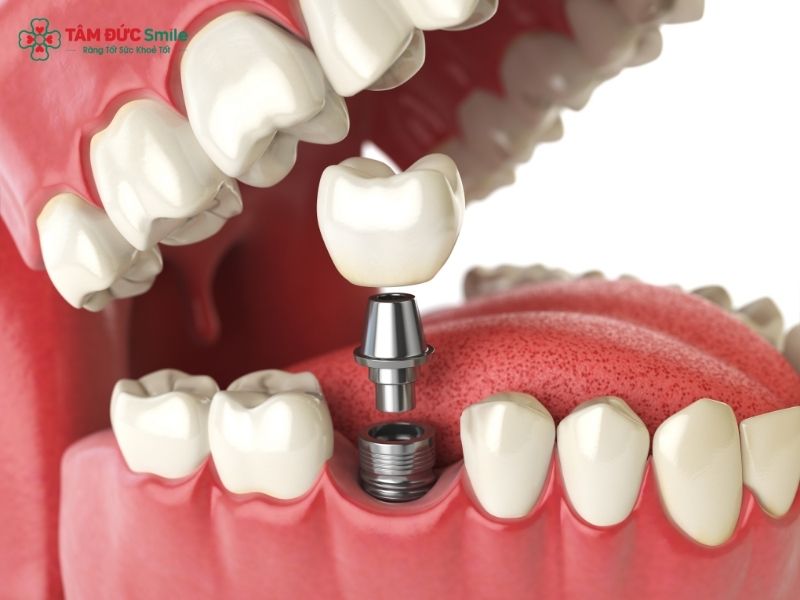
During the surgical phase, titanium implants are placed into the jawbone at predetermined positions. For All-on-4 implants, angled placement maximizes bone contact and stability.
Local anesthesia or sedation is used to ensure comfort. Following placement, temporary teeth may be attached, allowing patients to leave with a functional smile the same day in many cases.
3.3 Healing and Osseointegration
After surgery, the implants undergo osseointegration, a critical healing phase where bone cells bond with the implant surface. This process typically takes several months and determines the long-term success of full mouth dental implants.
During this time, patients follow specific dietary guidelines and oral hygiene instructions to support healing and reduce risks and complications.
3.4 Final Prosthetic Placement
Once osseointegration is complete, the final prosthesis is fabricated and attached. This fixed prosthesis is custom-designed for color, shape, and alignment, ensuring natural aesthetics and optimal function.
4. Benefits of Full Mouth Dental Implants
The advantages of full mouth dental implants extend far beyond appearance. Patients often report life-changing improvements in comfort, confidence, and quality of life.
4.1 Functional Benefits
One of the most significant benefits is restored chewing efficiency. Unlike dentures, full mouth dental implants allow patients to eat a wide range of foods without fear of slipping or discomfort.
Speech clarity also improves, as implants eliminate the movement associated with removable appliances. This stability enhances daily communication and social interactions.
4.2 Aesthetic and Psychological Benefits
From an esthetic perspective, full mouth dental implants closely resemble natural teeth. They support facial muscles, preventing the sunken appearance often associated with tooth loss.
Psychologically, patients experience increased self-confidence and emotional well-being. This comprehensive smile rehabilitation can positively impact both personal and professional life.
4.3 Comparison: Implants vs. Dentures
When comparing benefits vs. dentures, implants consistently outperform traditional solutions. Dentures may be more affordable initially, but they often require ongoing adjustments and do not prevent bone loss.
Full mouth dental implants, while a greater investment upfront, offer superior durability, comfort, and long-term maintenance value.
5. Risks and How to Minimize Them
As with any surgical procedure, full mouth dental implants carry potential risks and complications. Understanding these risks and how they are managed is essential for informed decision-making.
5.1 Common Risks
Possible complications include infection, swelling, bleeding, implant failure, or nerve irritation. These risks are relatively low when procedures are performed by experienced clinicians using proper protocols.
5.2 Reducing Risks Through Planning and Care
Meticulous planning, sterile surgical techniques, and patient compliance significantly reduce complications. Following post-operative instructions and attending follow-up appointments are critical components of success.
At Tam Duc Smile Dental, advanced diagnostics and personalized treatment planning play a central role in minimizing risks and ensuring predictable outcomes.
6. Cost of Full Mouth Dental Implants and Value Considerations
The cost of full mouth implants varies depending on multiple factors, and understanding these variables helps patients make informed financial decisions.
6.1 Factors Influencing Cost
Key cost determinants include:
- Number and type of implants
- Need for jawbone bone grafting
- Type of prosthesis (fixed or removable)
- Surgical complexity and technology used
While the initial cost may seem high, full mouth dental implants are designed as a long-term solution that can last decades with proper care.
6.2 Long-Term Value
When considering longevity, reduced maintenance, and improved quality of life, many patients find that full mouth dental implants provide exceptional value compared to repeated denture replacements.
7. Recovery, Aftercare, and Long-Term Maintenance
Successful outcomes depend not only on surgery but also on proper recovery and aftercare.
7.1 Immediate Recovery
After surgery, mild swelling and discomfort are normal. Most patients return to normal activities within a few days, following a soft-food diet during initial healing.
7.2 Daily Care and Maintenance
Maintaining full mouth dental implants involves regular brushing, flossing, and professional cleanings. Although implants are resistant to decay, surrounding tissues require consistent care.
Routine checkups ensure early detection of any issues and support long-term maintenance.
8. Patient Experiences and Real-Life Outcomes
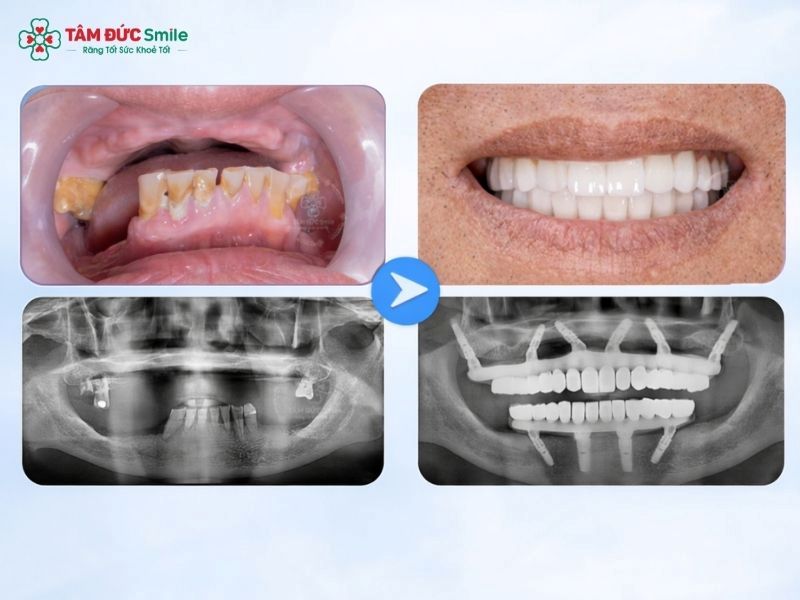
Patients who choose full mouth dental implants often describe the treatment as transformative. Improved function, restored confidence, and renewed social engagement are commonly reported outcomes.
Many patients who previously struggled with loose dentures or missing teeth find that full mouth dental implants allow them to live without constant concern about their smile.
8.1 Why Choose Tam Duc Smile Dental?
Choosing the right provider is as important as choosing the right treatment. At Tam Duc Smile Dental, patients benefit from:
- Comprehensive implant expertise
- Advanced diagnostic and surgical technology
- Personalized treatment plans
- Ongoing support throughout recovery and beyond
8.2 Final Thoughts and Next Steps
Full mouth dental implants represent a modern, reliable, and life-enhancing solution for complete tooth replacement. By addressing function, aesthetics, and long-term oral health, they offer unmatched benefits compared to traditional alternatives.
For patients seeking a confident smile and restored quality of life, full mouth dental implants may be the ideal next step. A professional consultation is the best way to explore options and begin the journey toward lasting smile rehabilitation.
Tam Duc Smile Dental Clinic – A Modern Nationwide Dental System
Tam Duc Smile Dental Clinic is a leading comprehensive dental system, offering a full range of oral healthcare services from basic to advanced treatments, including routine dental check-ups, cavity treatment, scaling and aesthetic fillings, teeth whitening, porcelain crowns and veneers, orthodontics, and dental implant placement. With a team of highly experienced and dedicated dentists, along with advanced technologies such as Cone Beam CT 3D imaging and CAD/CAM systems, Tam Duc Smile Dental Clinic is committed to delivering a perfect smile that is safe, durable, and long-lasting over time. Book your appointment today for a free consultation via Hotline 1900.8040
- 52 Tan Ky Tan Quy Street, Tay Thanh Ward, Ho Chi Minh City
- 140 Ly Thai To Street, Ban Co Ward, Ho Chi Minh City
- 76 Pham Hong Thai Street, Ben Thanh Ward, Ho Chi Minh City
- 708–720 Dien Bien Phu Street, Thanh My Tay Ward, Ho Chi Minh City
- 513 Hoang Van Thu Street, Tan Son Nhat Ward, Ho Chi Minh City
- 50 Le Van Viet Street, Tang Nhon Phu Ward, Ho Chi Minh City
- 1112 Huynh Tan Phat Street, Tan My Ward, Ho Chi Minh City
- 361 Phan Van Tri Street, Binh Loi Trung Ward, Ho Chi Minh City
- 128 Nguyen Oanh Street, Hanh Thong Ward, Ho Chi Minh City
- Hotline: 1900.8040 – 0329 851 079
- Opening hours: 08:00 AM – 07:30 PM; Sunday: 08:00 AM – 12:00 PM







Specialist Level I
Pham Nguyen
Content medically reviewed
A Specialist Level I in Odonto-Stomatology (Dentistry), former Deputy Head of the Department at the Ho Chi Minh City Hospital of Odonto-Stomatology, with extensive experience in dental implantology, sinus lift procedures, and oral and maxillofacial surgery. He has obtained numerous advanced professional certifications both in Vietnam and internationally.
Xem thêm thông tinBÀI VIẾT LIÊN QUAN
Multiple Tooth Implants: Implant-Supported Bridge & Jawbone Care
Multiple Tooth Implants are an advanced solution for replacing several missing teeth using titanium implants...
Do Dental Implants Hurt? Pain Timeline, Recovery & What to Expect
Do dental implants hurt? This is one of the most common concerns for patients considering...
Dental Implant Surgery: Procedure, Costs, Recovery & Advanced Techniques
Dental implant surgery is a modern dental implant procedure designed to replace missing teeth through...
Dental Implant Components: Parts, Materials & Implant System Explained
Dental implant components are the foundation of a successful implant restoration, consisting of three main...
Dental Implant Cleaning Tools for Implant Hygiene and Maintenance Guide
Dental implant cleaning tools play a vital role in maintaining long-term implant health and preventing...
Dental Implant Bridge: Implant-Supported Fixed Tooth Replacement
A dental implant bridge is an advanced implant-supported bridge solution designed to replace multiple missing...