


 VI
VIAn implant analog is a critical component in modern implant dentistry, serving as a physical replica of a dental implant used in dental lab workflow and master model fabrication. The implant analog definition refers to its role in accurately transferring implant position through impression coping, ensuring optimal dental restoration accuracy and precise dental prosthesis modeling. Common implant analog types include fixture-level analog and abutment analog, produced from various implant analog materials such as titanium, stainless steel, or plastic. Integrated with CAD/CAM in implant dentistry and advanced implant lab techniques, implant analogs enhance clinical outcomes. At Tam Duc Smile Dental, precise implant analog usage ensures predictable, high-quality restorations for patients.
1. What Is an Implant Analog? – Definition, Concept, and Role in Modern Dentistry
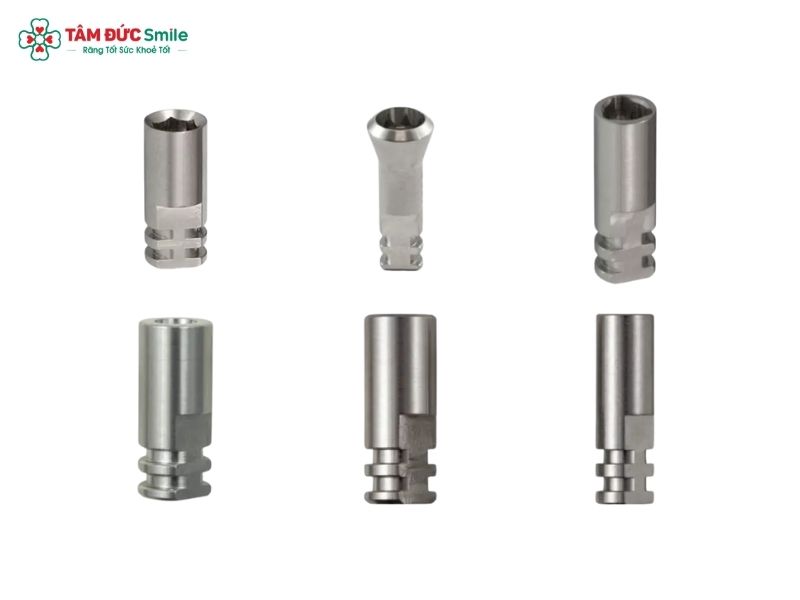
An implant analog (also written as implant analogue or dental implant analog) is a precisely manufactured component that replicates the position, orientation, and interface of a dental implant fixture inside a dental laboratory model. While the actual implant is surgically placed in the patient’s jawbone, the implant analog exists only in the laboratory environment, serving as a physical substitute that allows dental technicians to fabricate restorations with a high level of accuracy.
From a technical perspective, the implant analog definition can be summarized as follows: it is a mechanical replica of a dental implant, designed to reproduce the implant’s internal or external connection, platform diameter, and angulation within a working cast or digital model. This makes it possible to design crowns, bridges, or full-arch prostheses without the physical implant being present.
The primary purpose of an implant analog is to transfer the exact three-dimensional position of the implant from the patient’s mouth to the laboratory model. This transfer is essential because even minimal discrepancies in angulation or depth can lead to prosthetic misfit, occlusal problems, or long-term mechanical complications.
At Tam Duc Smile Dental, implant analogs are considered a critical link between clinical implant surgery and prosthetic excellence, ensuring that restorations fabricated in the lab integrate seamlessly with implants placed in patients.
2. How Implant Analogs Are Used in Dental Laboratories
2.1 Implant Lab Techniques and Workflow Overview
In modern implant lab techniques, the implant analog plays a central role in transforming clinical data into a precise physical or digital restoration. The workflow typically begins chairside and continues through multiple laboratory stages, all of which depend on accurate analog positioning.
The process usually includes:
- Placement of an impression coping onto the implant in the patient’s mouth
- Taking a conventional or digital impression
- Seating the implant analog into the impression
- Pouring or printing the master model
- Designing and fabricating the final restoration
Each step relies on the implant analog to maintain fidelity to the original implant position.
2.2 Relationship Between Implant Analog and Impression Coping
The impression coping is the clinical component that captures the spatial location of the implant. Once the impression is taken, the coping is connected to the implant analog. This assembly allows the analog to occupy the exact implant position in the stone or printed model.
Without this step, the laboratory would have no reliable reference for:
- Implant depth
- Implant angulation
- Implant connection type
Thus, the implant analog purpose is inseparable from the impression process and is fundamental to dental restoration accuracy.
2.3 Master Model Fabrication and Prosthetic Precision
Once the implant analog is embedded in the master model, it becomes the foundation for all prosthetic modeling. Crowns, bridges, and implant-supported dentures are fabricated directly on this analog, ensuring that the final prosthesis will seat passively on the actual implant.
Inaccurate analog placement can result in:
- Poor marginal fit
- Occlusal imbalance
- Screw loosening
- Prosthetic fracture
For this reason, high-end clinics such as Tam Duc Smile Dental emphasize strict protocols for implant analog handling and verification during lab communication.
3. Types of Implant Analogs
3.1 Classification of Implant Analog Types
There are several implant analog types, each designed for specific restorative scenarios. The two most common categories are fixture-level analogs and abutment analogs.
Understanding the distinction between these types is essential for selecting the correct component and avoiding restorative errors.
3.2 Fixture-Level Implant Analog
A fixture-level analog replicates the implant platform and internal connection. It is used when restorations are designed directly on the implant fixture rather than on a prefabricated abutment.
Key characteristics:
- Matches implant brand and connection geometry
- Used for custom abutments and screw-retained restorations
- Provides maximum restorative flexibility
This type of implant analog is widely used in complex implant cases, including multi-unit bridges and full-arch restorations.
3.3 Abutment Analog
An abutment analog represents the abutment interface rather than the implant itself. It is typically used when a prefabricated abutment is selected chairside and the restoration is fabricated on top of that abutment.
Key characteristics:
- Used for cement-retained crowns
- Simplifies lab workflow
- Less flexible than fixture-level analogs
Choosing between a fixture-level analog and an abutment analog depends on the restorative plan, esthetic demands, and occlusal considerations.
4. Materials Used in Implant Analogs
4.1 Common Implant Analog Materials
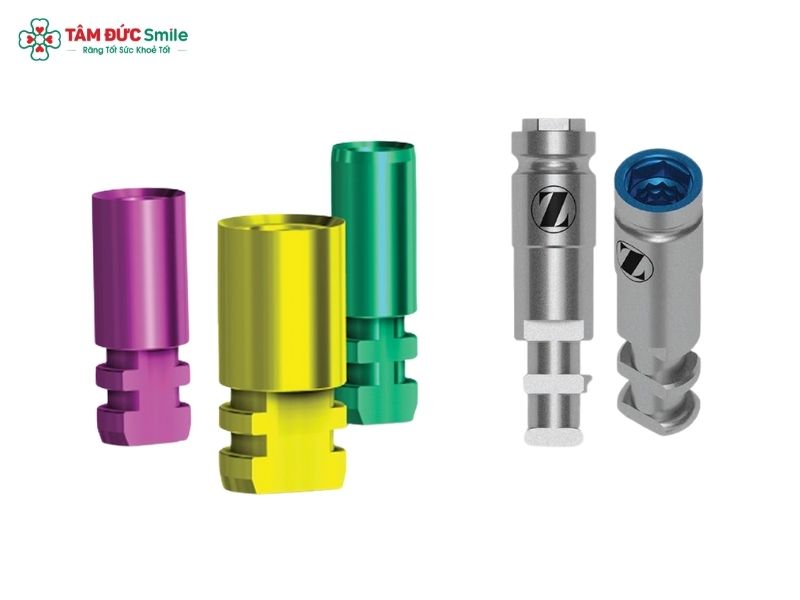
The choice of implant analog materials directly affects durability, precision, and long-term reliability in the lab. Common materials include:
- Stainless steel
- Titanium
- Aluminum or reinforced plastic
Each material has unique mechanical and practical properties.
4.2 Metal Implant Analogs
Stainless steel and titanium implant analogs are preferred for high-precision cases due to their strength and dimensional stability.
Advantages:
- High resistance to wear
- Accurate replication of implant connections
- Suitable for repeated use
These materials are commonly used in advanced prosthetic cases at Tam Duc Smile Dental, where precision is prioritized.
4.3 Plastic and Aluminum Implant Analogs
Plastic or aluminum analogs are often used for:
- Diagnostic models
- Temporary restorations
- Educational purposes
While more affordable, they may lack the long-term durability of metal analogs and are typically reserved for less demanding cases.
5. CAD/CAM Integration and Digital Implant Analog Workflow
5.1 CAD/CAM in Implant Dentistry
The integration of CAD/CAM in implant dentistry has transformed how implant analogs are used. Digital workflows now allow for:
- Virtual implant positioning
- Digital impression capture
- 3D-printed models with embedded analogs
This hybrid approach combines digital accuracy with physical verification.
5.2 Digital Implant Analog Placement
In a digital workflow, the implant analog may be inserted into a 3D-printed master model rather than a stone cast. This ensures compatibility with milling and printing technologies while maintaining mechanical accuracy.
Benefits include:
- Reduced human error
- Faster turnaround times
- Improved reproducibility
5.3 Digital Accuracy and Prosthetic Fit
By combining implant analog digital workflow with CAD/CAM design, clinics can achieve superior dental restoration accuracy, particularly in full-arch implant cases.
At Tam Duc Smile Dental, digital implant workflows supported by precise analog placement help deliver restorations with excellent functional and esthetic outcomes.
6. Implant Analog vs Implant: Understanding the Difference
6.1 Implant Analog vs Implant
One of the most common questions is the difference between an implant analog vs implant.
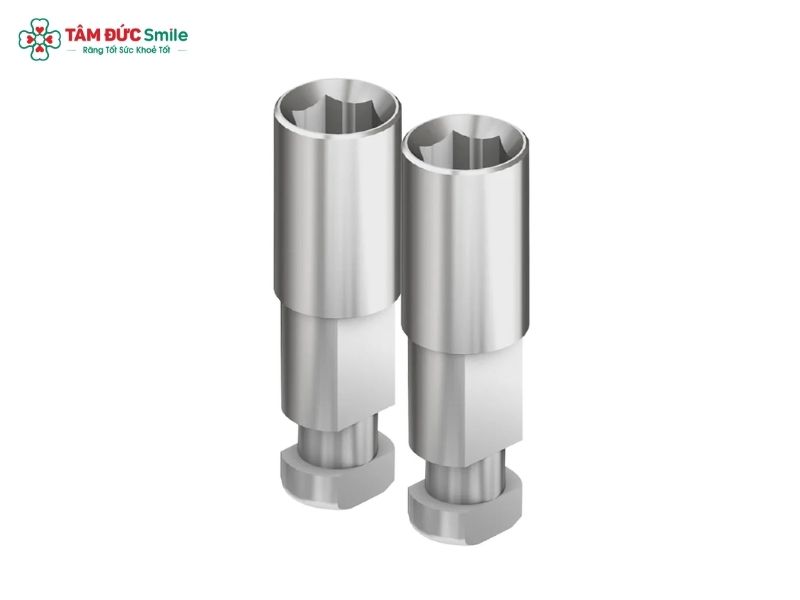
- A dental implant is surgically placed in bone and integrates biologically.
- An implant analog is a laboratory component with no biological function.
Patients never receive or see the implant analog, but its accuracy directly impacts their final result.
6.2 Functional Relationship Between the Two
The implant analog ensures that the prosthesis fabricated in the lab will fit passively on the implant in the mouth. This indirect relationship makes the analog an invisible yet essential contributor to treatment success.
7. Implant Analogs in Education and Clinical Training
7.1 Dental Prosthesis Modeling for Training
In dental schools and continuing education programs, implant analogs are widely used for dental prosthesis modeling. Students learn:
- Implant positioning concepts
- Prosthetic design principles
- Lab-clinic communication
7.2 Simulation and Skill Development
Using implant analogs allows clinicians to practice complex cases without risk to patients. This simulation-based learning improves both technical skill and clinical confidence.
8. Why Implant Analogs Matter for Patients
8.1 Impact on Restoration Fit and Longevity
Although patients never interact with an implant analog, its precision affects:
- Crown fit
- Bite comfort
- Long-term implant stability
A well-positioned implant analog reduces the risk of complications such as screw loosening or prosthetic fracture.
8.2 Patient-Centered Outcomes at Tam Duc Smile Dental
At Tam Duc Smile Dental, meticulous use of implant analogs ensures that every implant-supported restoration meets high standards of function, comfort, and esthetics.
By combining advanced implant lab techniques, high-quality implant analog materials, and digital CAD/CAM workflows, the clinic delivers predictable and durable implant outcomes—giving patients confidence in both their smile and long-term oral health.
Tam Duc Smile Dental Clinic – A Modern Nationwide Dental System
Tam Duc Smile Dental Clinic is a leading comprehensive dental system, offering a full range of oral healthcare services from basic to advanced treatments, including routine dental check-ups, cavity treatment, scaling and aesthetic fillings, teeth whitening, porcelain crowns and veneers, orthodontics, and dental implant placement. With a team of highly experienced and dedicated dentists, along with advanced technologies such as Cone Beam CT 3D imaging and CAD/CAM systems, Tam Duc Smile Dental Clinic is committed to delivering a perfect smile that is safe, durable, and long-lasting over time. Book your appointment today for a free consultation via Hotline 1900.8040
- 52 Tan Ky Tan Quy Street, Tay Thanh Ward, Ho Chi Minh City
- 140 Ly Thai To Street, Ban Co Ward, Ho Chi Minh City
- 76 Pham Hong Thai Street, Ben Thanh Ward, Ho Chi Minh City
- 708–720 Dien Bien Phu Street, Thanh My Tay Ward, Ho Chi Minh City
- 513 Hoang Van Thu Street, Tan Son Nhat Ward, Ho Chi Minh City
- 50 Le Van Viet Street, Tang Nhon Phu Ward, Ho Chi Minh City
- 1112 Huynh Tan Phat Street, Tan My Ward, Ho Chi Minh City
- 361 Phan Van Tri Street, Binh Loi Trung Ward, Ho Chi Minh City
- 128 Nguyen Oanh Street, Hanh Thong Ward, Ho Chi Minh City
- Hotline: 1900.8040 – 0329 851 079
- Opening hours: 08:00 AM – 07:30 PM; Sunday: 08:00 AM – 12:00 PM







Specialist Level I
Pham Nguyen
Content medically reviewed
A Specialist Level I in Odonto-Stomatology (Dentistry), former Deputy Head of the Department at the Ho Chi Minh City Hospital of Odonto-Stomatology, with extensive experience in dental implantology, sinus lift procedures, and oral and maxillofacial surgery. He has obtained numerous advanced professional certifications both in Vietnam and internationally.
Xem thêm thông tinBÀI VIẾT LIÊN QUAN
Multiple Tooth Implants: Implant-Supported Bridge & Jawbone Care
Multiple Tooth Implants are an advanced solution for replacing several missing teeth using titanium implants...
Do Dental Implants Hurt? Pain Timeline, Recovery & What to Expect
Do dental implants hurt? This is one of the most common concerns for patients considering...
Dental Implant Surgery: Procedure, Costs, Recovery & Advanced Techniques
Dental implant surgery is a modern dental implant procedure designed to replace missing teeth through...
Dental Implant Components: Parts, Materials & Implant System Explained
Dental implant components are the foundation of a successful implant restoration, consisting of three main...
Dental Implant Cleaning Tools for Implant Hygiene and Maintenance Guide
Dental implant cleaning tools play a vital role in maintaining long-term implant health and preventing...
Dental Implant Bridge: Implant-Supported Fixed Tooth Replacement
A dental implant bridge is an advanced implant-supported bridge solution designed to replace multiple missing...